200+ Middle School Students. Two Disciplines. One System.
How One Teacher Structures Chorus and Music Technology Inside a Single Platform
Lost Mountain Middle School – Kennesaw, GA
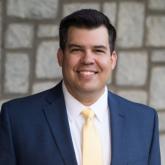
Jay Champion, Chorus & Music Technology Teacher
In many middle schools, one teacher runs both performance ensembles and general music classes. Chorus in one period. Music technology in the next. Rehearsal-based instruction alongside project-based creative work.
Managing both well — with 200+ students and a full schedule — takes more than strong instruction. It requires a system.
At Lost Mountain Middle School, Jay Champion teaches 200–250 chorus students each year. He also teaches 18-week music technology courses.
Using MusicFirst Classroom as the central hub of his program, Jay manages students, assignments, grades, and integrated software tools for both disciplines from a single dashboard.
In chorus, he structures differentiated assessment using Sight Reading Factory and PracticeFirst.
In music technology, students compose, revise, and build portfolios inside Soundtrap and Noteflight.
Here’s how that structure works in a large middle school program.
The Program Reality
Lost Mountain Middle School serves approximately 1,000 students in grades 6–8. Jay has taught there since 1998.
His teaching load has included:
- Grade-level chorus
- General music
- 18-week music technology courses
Before cloud-based tools, Jay’s music technology classes required a dedicated lab, installed software, and constant troubleshooting. Curriculum was built from scratch. Tutorial videos had to be recreated when software changed. If the software changed, projects had to be rebuilt.
It worked — but required constant maintenance.
Nothing lived in one unified, music-specific system. Projects, assessments, and grades were managed across separate tools.
In chorus, the challenge was different. Students sight-read together. Stronger singers carried the room. Progress could be heard — but documenting individual growth across 200+ students simply wasn’t realistic.
Differentiation meant more planning.
Documentation meant more grading.
Individual assessment required time that didn’t exist.
When instruction moved online in 2020, Jay moved both rehearsal assessments and creative projects into MusicFirst Classroom.
The goal wasn’t to change how he teaches.
It was to make growth and documentation possible in a large middle school program — across both ensemble and general music classes.
Structured Growth in Chorus
Jay assigns sight-reading assessments several times each year, allowing students to record individually in a focused setting.
Across six assignments over three years for one cohort, an average of 38% of students advanced at least one level per assignment.
Inside Sight Reading Factory:
- Students begin at a baseline level
- Advancement requires a 95% score
- Examples are uniquely generated
- Performances are recorded and auto-scored
- Scores flow directly into the gradebook
Approximately 80% of students score 80 or higher at their assigned level, indicating that most students are working at an appropriate level of challenge.
From two cohorts of approximately 130 students:
- 7 students reached Level 12 (7th/8th Grade All-State level)
- 4 students reached Level 14 (9th/10th Grade All-State level)
- 1 student reached Level 16 (11th/12th Grade All-State level)
“One of the highest levels of technology integration is when you’re able to do something you otherwise could not do at all. Before [MusicFirst], I wasn’t able to assess individual sight-reading like this.”
Recorded submissions make individual progress visible over time and are tied directly to mastery thresholds.
“There’s no practical way I could manage differentiated, recorded sight-reading assessment for 200+ students without this platform.”
— Jay Champion
The structure also influences student behavior — some students request harder levels after earning 95% or higher.
“I’ve had students finish an assignment and immediately email me asking for a harder level.”
Structured Creativity in Music Technology
The same platform supports Jay’s music technology classes.
Using Soundtrap and Noteflight inside MusicFirst Classroom, students:
- Compose and arrange
- Record and revise
- Notate and edit
- Submit finished projects digitally
One of Jay’s favorite major projects requires students to score public-domain children’s books, combining narration, original composition, and sound design.
Projects are saved and archived. Revision history is visible. Growth builds over time.
Jay can compare early-semester compositions to later work — seeing clearer form, stronger melodic development, improved texture, and more confident sound design choices.
Students build digital portfolios that document their creative progress.
Those portfolios provide evidence of student growth during evaluations and program reviews.
Beyond graded assignments, Jay makes additional courses available without requiring them.
One student built a personal library of more than 1,400 MIDI files to experiment with arranging and orchestration.
Jay didn’t assign it.
He made the tools available — and the student pursued it on their own.
Running Chorus and Music Technology in One System
For Jay, the MusicFirst Classroom is not an add-on.
It’s how he organizes his program.
Within one system, he can manage:
- Mastery-based assessment in chorus
- Documented progression over time
- Structured creative work in music technology
- Archived student portfolios
- Grading workflows
- Class organization across sections
With more than 200 singers and multiple general music classes, having everything in one place matters.
With MusicFirst as the foundation of Jay’s program, individual growth becomes possible — in both ensemble and general music — within the realities of one teacher’s day.
Snapshot: Lost Mountain Middle School
School Profile
- ~1,000 students (grades 6-8)
- 200-250 chorus students annually
- 18-week music technology courses
Program Structure
- Differentiated sight-reading with 95% mastery thresholds
- Auto-scored, recorded submissions
- 38% average advancement per assignment
- Structured creative curriculum in music technology
- Documented creative growth through digital portfolios
- Unified program management across chorus and general music
District Music Profile – Cobb County School District
Cobb County enrolls 40,000+ students in music electives across band, chorus, orchestra, and more, with every elementary student receiving music instruction. For over 20 years, it’s earned NAMM’s “Best Communities for Music Education” designation, with ensembles performing at Georgia Music Educators Association Conference, the Midwest Clinic, and national events.
Lost Mountain Middle School’s chorus and music technology program sits within this larger ecosystem, showing how one teacher can leverage a unified, music-specific platform to support individual growth in a highly developed music district.
MusicFirst Classroom is used across Cobb County Schools, supporting music educators at multiple grade levels.
Testimonials