The Complete Webinar
As AP Music Theory students prepare for the exam, success depends on more than memorizing concepts—it requires developing strong listening skills, confident sight singing, and effective test-taking strategies.
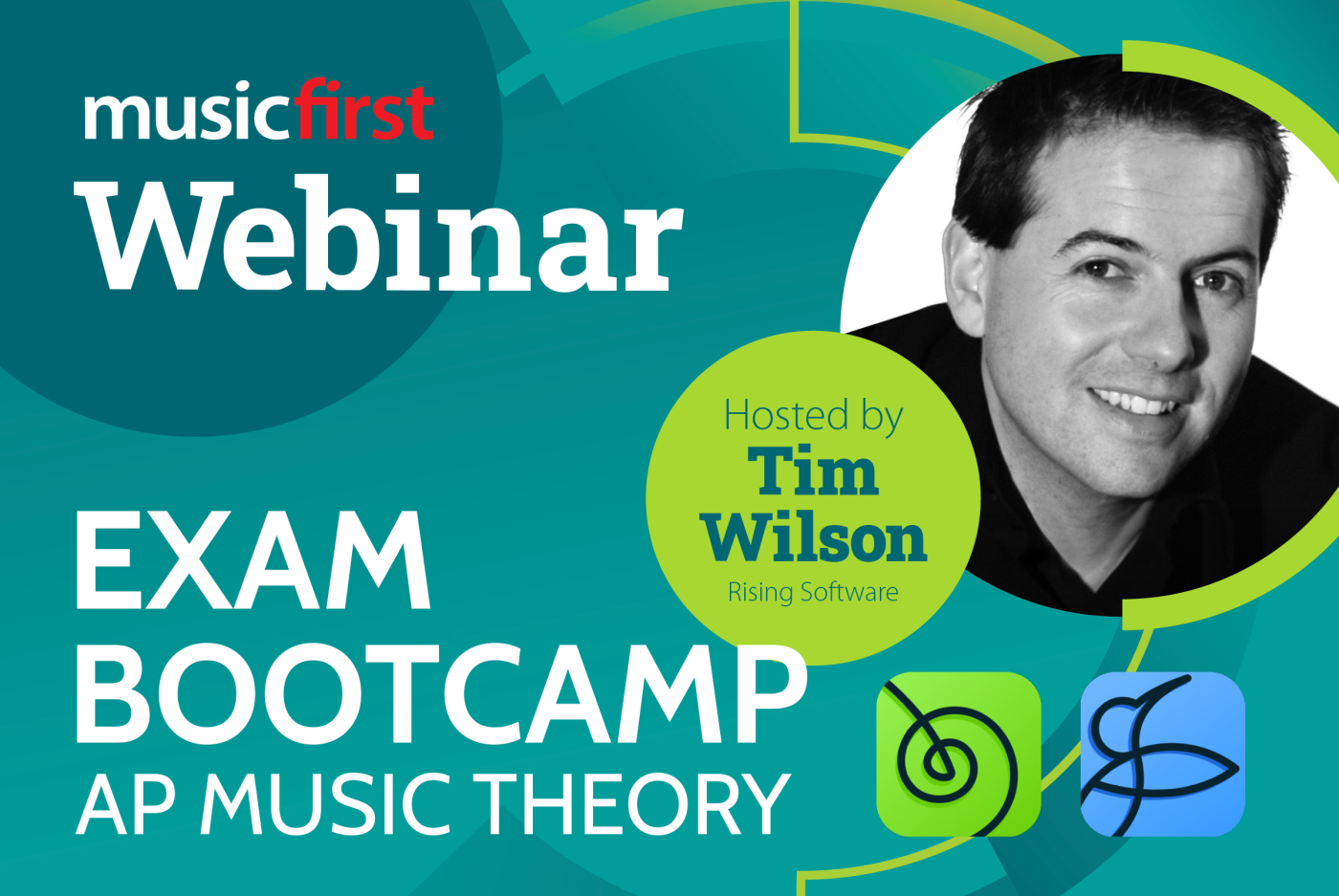
In this AP Music Theory Bootcamp webinar, presenter Tim Wilson shares practical techniques that students can immediately apply to improve performance on both the free-response and sight-singing portions of the AP Music Theory Exam.
Whether you're preparing for this year's assessment or building skills for the future, these strategies can help strengthen your understanding of music theory and improve exam confidence.
Key Takeaways from the Webinar
Moments from the Bootcamp
Pull out the moments that matter most to you — or share individual clips with students as targeted review.
Approaching Sight Singing Questions
This section helps students understand how the sight singing questions are structured so they can optimize their practice time leading up to the exam.
Identifying Familiar Melodies in Sight Reading Questions
Tim shows how students can use familiar melodic patterns like arpeggios and fragments from well known songs to approach sight-singing questions.
Sight Singing 2 Strategies
This section addresses scanning the melody for common patterns, difficult leaps, chromatic pitches, and also helping students to establish a strong sense of the key center before singing.
Approach to Free-Response 6
This section outlines chord spelling and voice leading guidelines for approaching four-part writing questions in the AP Music Theory Exam.
Four-Part Writing Strategies
This section focuses on some of the most important written skills on the exam: Identifying common harmonic vocabulary and chord spelling.
What Students Should Practice Before the Exam
Here are some helpful tips from Tim Wilson on how students can prepare for both written and aural portions of the exam.
Exam Tip: Identify common melodic patterns and shapes.
Exam Tip: Combine your theory & aural skills to help inform your answers.
Exam Tip: For part writing questions, correct chord spelling is essential.
Good Luck!
AP Music Theory success comes from consistent practice and strong musical habits.
Want to keep practicing? Explore MusicFirst Classroom AP Music Theory resources to support sight singing, ear training, written theory, and free-response practice.
About Natalia Buitrago
Natalia Buitrago is the Head of US Marketing at MusicFirst. She holds a MA from Teachers College, Columbia University and a BM from The Crane School of Music at SUNY Potsdam.